EVPlugsMap – Find EV Charging Stations Near You | 89,000+ US Locations
89,000+ US charging stations · updated regularly

Find your nearest
EV charging station

Tesla · ChargePoint · EVgo · Electrify America · Blink — compare connector types, port counts and pricing across all 50 states

Try:
89,000+
EV charging stations
53
States & territories covered
7,200+
Cities & towns
10+
Networks compared
Tesla

Tesla Superchargers - DC fast, most now open to all EVs

Tesla's Supercharger network is the largest DC fast network in the US. Many V3 and V4 sites now accept non-Tesla vehicles via the Magic Dock or NACS adapter — check each station's details before you go.

Speed
Up to 250 kW
Connector
NACS / Magic Dock
Access
Most sites, all EVs
Payment
Tesla app / RFID
Browse Tesla-served citiesTop 10 by station count
ChargePoint

ChargePoint - the largest Level 2 network

ChargePoint runs the biggest network of Level 2 chargers in North America, found at workplaces, garages, shopping centers and apartment complexes, plus a growing number of DC fast sites.

Speed
L2 + DC fast
Connector
J1772 / CCS
Access
Mostly public
Payment
App / RFID card
Browse ChargePoint-served citiesTop 10 by station count
EVgo

EVgo - DC fast in high-traffic spots

EVgo focuses on DC fast charging in grocery store lots, retail centers and along major corridors, making it a good option for quick top-ups during errands or road trips.

Speed
Up to 350 kW
Connector
CCS / CHAdeMO
Access
Public
Payment
App / tap-to-pay
Browse EVgo-served citiesTop 10 by station count
Electrify America

Electrify America - built for road trips

Electrify America runs high-power DC fast stations along interstate corridors and at Walmart/Target locations, purpose-built for long-distance EV travel.

Speed
Up to 350 kW
Connector
CCS / CHAdeMO
Access
Public
Payment
App / plug & charge
Browse Electrify America-served citiesTop 10 by station count
By State

EV Charging Stations - by State

Every state has its own mix of networks, incentives and charger density. Browse the states with the most stations, or view the full state directory.

States covered
53
Top state
California
Data
Updated regularly
Filter by
Network, city
Browse by stateTop 12 by station count
By City

EV Charging Stations - by City

Charger density varies a lot city to city. Start with the busiest metros below, or browse the full city directory.

Cities covered
7,200+
Top city
Los Angeles
Data
Updated regularly
Filter by
Network, search
Browse by cityTop 12 by station count

Types of EV chargers, explained

Not all EV chargers are the same speed. Understanding the three main levels helps you plan how long a stop will actually take.

Level 1

Standard 120V household outlet. Adds roughly 3-5 miles of range per hour. Rarely found in public directories — mostly a home/overnight option.

Level 2

240V, found at workplaces, garages, hotels and retail lots. Adds roughly 12-25 miles of range per hour — a good fit for a few hours of parking.

DC Fast

400-1000V DC, delivered directly to the battery. Can add 60-80% charge in 20-45 minutes depending on vehicle and station power output.

Connector types in the US

Your vehicle's inlet determines which stations you can actually use. Here's what each connector code on a station listing means:

  • J1772 — the standard Level 2 connector for nearly all non-Tesla EVs sold in the US before the NACS transition.
  • CCS (J1772 Combo) — adds two DC pins below a J1772 head for DC fast charging; the most common non-Tesla fast connector.
  • CHAdeMO — an older DC fast standard, mainly used by older Nissan Leaf and Mitsubishi models. Being phased out by most networks.
  • NACS (Tesla) — Tesla's connector, now being adopted industry-wide; many 2025+ non-Tesla EVs ship with NACS ports or adapters.
  • NEMA 14-50 / 5-15 / 5-20 — standard household/RV-style outlets, typically Level 1 or basic Level 2 setups.

How much does EV charging cost?

Pricing depends entirely on the network, location and whether you're on Level 2 or DC Fast. Common pricing models you'll see on station listings:

  • Per kWh — you pay for exactly the energy delivered, similar to a utility bill. The most transparent model where it's legal.
  • Per minute — common at DC fast stations in states that restrict per-kWh resale; rate often varies with charging speed tier.
  • Free — some workplace, retail and municipal Level 2 stations are free as an amenity, though usually time-limited.
  • Membership discounts — networks like EVgo and Electrify America offer monthly plans that lower per-session cost for frequent users.

Always check the "Pricing" field on a station's detail page — rates can vary a lot even within the same network depending on location and local electricity costs.

Home charging vs. public charging

Most EV owners do the majority of their charging at home overnight on Level 2, and use this directory mainly for road trips, apartment living, or topping up during errands. A few things to weigh:

Home charging

Cheapest per kWh in most states, always available, and no waiting — but requires a driveway or garage with electrical access, plus the upfront cost of a home charger installation.

Public charging

Essential for apartment/condo dwellers, road trips, and emergency top-ups. Costs more per kWh on average than home electricity, and availability can vary by time and location — this directory helps you check real port counts before you go.

Planning an EV road trip

  • Map your route in 100-150 mile DC-fast-to-DC-fast segments, leaving buffer for detours and weather.
  • Check the network app for real-time stall availability before you arrive, especially at busy corridor stations.
  • Have a backup network in mind at each stop — a second nearby station saves a lot of stress if your first choice is occupied or down.
  • Charge to 80% rather than 100% on DC fast when possible; charging speed tapers significantly above 80%, so it's often faster overall to stop twice and charge to 80% each time.
  • Cold weather reduces both range and charging speed — build in extra buffer on winter trips.

EV charging etiquette

  • Move your vehicle once charging is complete, especially at busy DC fast locations — "charging etiquette" violations are the #1 complaint among EV drivers.
  • Don't unplug someone else's actively-charging vehicle, even if you're in a hurry.
  • Report broken or out-of-service chargers through the network app so other drivers (and the network) know before they arrive.
  • Park fully within the marked bay so the cable can reach without blocking adjacent stalls.
Why EVPlugsMap

A directory built for finding a charger fast

No account, no app install, no clutter — just station data.

Every network, one search

Compare Tesla, ChargePoint, EVgo, Electrify America, Blink and more side by side instead of checking five different apps.

Real port counts

Every listing shows exact DC Fast and Level 2 port counts, not just a pin on a map.

State & city coverage

Browse by state or city with live search and network filtering, not a single unsorted list.

How it works

Three steps to your nearest charger

No account needed. Just search, compare and go.

Step 01

Search your area

Type your city, state or ZIP. EVPlugsMap instantly surfaces every charging station nearby.

Step 02

Filter by network

Narrow down to Tesla, ChargePoint, EVgo, Electrify America, Blink or any network you're a member of.

Step 03

Get directions

Tap any result for connector types, port counts, pricing and a direct link to maps for turn-by-turn navigation.

FAQ

Frequently asked questions

Everything drivers ask us about finding and using EV charging stations.

Getting started

How do I find an EV charging station near me? +
Use the search box at the top of this page and enter your city, state or ZIP code. You'll get a list of every station nearby with network, connector type and port counts.
Do I need an account to use EVPlugsMap? +
No. Browsing and searching stations is free and doesn't require an account. You may still need the relevant network's own app or RFID card to start a charging session at the station itself.
Is this directory free to use? +
Yes, EVPlugsMap is a free, independent directory of EV charging stations. It isn't affiliated with any single network or vehicle manufacturer.
How current is the station data? +
Station data is compiled from publicly available sources and updated regularly. Individual port availability and pricing can still change day to day — always confirm on the network's own app before a trip.
Can I search by ZIP code instead of city? +
Yes, the search box accepts ZIP codes as well as city and state names.
Does EVPlugsMap cover charging stations outside the US? +
Coverage currently focuses on the United States, across all 50 states plus Washington D.C.

Charging levels & speed

What's the difference between Level 1, Level 2 and DC Fast charging? +
Level 1 uses a standard 120V outlet and is the slowest (roughly 3-5 miles of range per hour). Level 2 uses 240V and adds about 12-25 miles per hour. DC Fast delivers power directly to the battery and can add 60-80% charge in 20-45 minutes.
How long does it take to fully charge an EV? +
It depends heavily on the charger level, your vehicle's onboard charger, and battery size. Level 2 typically takes 4-10 hours for a full charge; DC Fast can reach 80% in well under an hour on a compatible vehicle and station.
Why does charging slow down above 80%? +
Lithium-ion batteries taper their charge rate as they fill up to protect battery health, so the last 20% takes disproportionately longer on DC fast chargers than the first 80%.
Can I use a Level 1 charger for daily driving? +
If your daily mileage is low and the car is parked for 10+ hours overnight, Level 1 can be enough. Most drivers with longer commutes prefer Level 2 for daily use.
Does cold weather affect charging speed? +
Yes. Cold battery temperatures reduce both charging speed and driving range. Many EVs precondition the battery automatically when navigating to a DC fast charger to reduce this effect.
What's the fastest charging speed available today? +
Some DC fast stations now advertise up to 350 kW, though actual charging speed also depends on your vehicle's maximum accepted charge rate — most EVs peak well below that figure.

Connectors & compatibility

What is CCS? +
CCS (Combined Charging System) adds two DC pins below a standard J1772 head, enabling DC fast charging. It's the most common non-Tesla fast-charging connector in the US.
What is CHAdeMO and is it still used? +
CHAdeMO is an older DC fast standard used mainly by older Nissan Leaf and some Mitsubishi models. Most networks are phasing it out in favor of CCS and NACS.
What is NACS? +
NACS (North American Charging Standard) is Tesla's connector design, now being adopted industry-wide. Many non-Tesla EVs from 2025 onward ship with NACS ports or come with an adapter.
Can non-Tesla EVs use Tesla Superchargers? +
Many Supercharger sites now support non-Tesla vehicles via the Magic Dock (a built-in CCS adapter) or a NACS-to-CCS adapter. Check each station's listing to confirm before you go.
Do I need an adapter for my EV? +
If your vehicle has a J1772/CCS port and you want to use a Tesla-only Supercharger, you'll need a NACS adapter (included with some vehicles). Tesla vehicles need a CHAdeMO or CCS adapter to use some non-Tesla DC fast stations.
How do I know which connector my car uses? +
Check your owner's manual or the charging port itself — most EVs sold in the US use J1772 for Level 2, plus either CCS or NACS for DC fast charging.

Cost & payment

How much does it cost to charge an EV at a public station? +
It varies widely by network, location and charging speed — anywhere from free at some workplace/retail Level 2 stations to $0.30-$0.60+ per kWh at DC fast stations. Check the listed pricing on each station page.
Why do some stations charge per minute instead of per kWh? +
Some states restrict selling electricity by the kWh outside of regulated utilities, so networks bill by connection time instead, often with tiered rates based on charging speed.
Are there free EV charging stations? +
Yes — some workplaces, retail centers, hotels and municipal lots offer free Level 2 charging as an amenity, usually with a time limit. Free DC fast charging is rare.
Do charging networks offer membership plans? +
Yes, several networks including EVgo and Electrify America offer monthly membership plans that reduce the per-session or per-kWh cost for frequent users.
What payment methods do charging stations accept? +
Most accept the network's own app, an RFID card/fob, or contactless tap-to-pay. Some newer stations also support plug-and-charge for compatible vehicles with no app needed.
Is EV charging cheaper than gas? +
Home charging is typically cheaper per mile than gasoline in most states. Public DC fast charging costs more than home charging but is often still competitive with, or cheaper than, gas depending on local electricity and fuel prices.

Networks & apps

Do I need a different app for every charging network? +
Generally yes — each network (Tesla, ChargePoint, EVgo, Electrify America, Blink) has its own app for starting sessions and payment, though many stations now also support tap-to-pay without an app.
Which EV charging network is the biggest? +
Tesla's Supercharger network is the largest DC fast network by station count; ChargePoint operates the largest overall network when Level 2 stations are included.
How do I check if a charger is working before I drive there? +
Check the specific network's app for real-time status — most show whether a stall is available, in use, or reported out of service.
Can I reserve a charging stall in advance? +
Some networks offer reservation features on select high-demand corridor sites, usually for a small fee. Availability varies by network and location.
What is plug-and-charge? +
Plug-and-charge lets a compatible vehicle automatically authenticate and start a session the moment you plug in — no app, card or tap needed. Support varies by vehicle and network.
Do all networks let me pay without an app now? +
Not all, but tap-to-pay/contactless card payment is becoming standard at newer DC fast stations across most major networks.

Home vs. public charging

Should I charge at home or use public stations? +
Most owners charge primarily at home overnight for cost and convenience, and use public stations for road trips, apartment living, or topping up during errands.
Can I charge an EV without a home charger installed? +
Yes — you can plug into a standard 120V outlet for slow Level 1 charging, or rely on public Level 2/DC fast stations if a home charger isn't an option.
What if I live in an apartment with no home charging? +
Look for nearby public Level 2 stations you can use regularly — workplace charging, grocery store lots and municipal garages are common options. Filter by your city on this directory to see what's nearby.
How much does installing a home Level 2 charger cost? +
Costs vary by home electrical setup and region, but typically range from a few hundred to a couple thousand dollars including equipment and installation.
Is it bad to charge to 100% every day? +
Most manufacturers recommend keeping daily charge levels between 20-80% for long-term battery health, reserving 100% charges for longer trips.

Road trips & long distance

How do I plan an EV road trip? +
Map your route in segments between DC fast stations, check real-time availability before each stop, and keep a backup station in mind in case your first choice is busy or offline.
Should I charge to 100% on a road trip? +
Usually not — charging speed slows significantly above 80%, so it's often faster overall to stop twice and charge to 80% each time rather than wait for a single full charge.
What happens if a charging station is broken when I arrive? +
Always have a backup station in mind, especially on road trips. Report broken chargers through the network's app to help other drivers and speed up repairs.
Does towing affect EV charging or range? +
Yes — towing significantly reduces range and increases how often you'll need to stop and charge, so build in extra buffer when planning a route.
How far apart are DC fast chargers on major highways? +
Spacing varies by corridor and state, but major interstate routes increasingly have DC fast stations every 50-100 miles as networks expand along federally-funded corridors.

Troubleshooting & etiquette

What should I do if a charger won't start a session? +
Try restarting the session through the network app, check the connector is fully seated, and contact the network's support line if the issue persists. Try a different stall if one's available.
Is it rude to unplug someone else's car? +
Yes — never unplug a vehicle that's actively charging, even if you need the stall. Wait or find another station.
What is "charger etiquette" and why does it matter? +
It refers to community norms like moving your car promptly once charging finishes, not blocking stalls with a non-charging vehicle, and reporting broken equipment — all of which keep limited charging capacity available for everyone.
How do I report an incorrect or outdated station listing? +
Station data is compiled from publicly available sources; if you spot something outdated, the underlying network's own app is usually the fastest way to confirm current status.
Why is a station showing as occupied when no one's there? +
This can happen with stale network data or a stall stuck in a fault state — check the network app directly, or try again after a few minutes.

Business, fleet & other questions

Can businesses install their own EV chargers for customers? +
Yes — many networks offer commercial installation programs for retail, hospitality and workplace locations, often with incentive programs available depending on the state.
Are there tax incentives for installing EV chargers? +
Many states and the federal government offer incentives for EV charger installation; availability and amounts vary by state and change over time, so check current programs before installing.
How does EV charging work for fleet vehicles? +
Fleets typically combine dedicated depot charging (often Level 2 or DC fast) with public network access for vehicles operating outside the home base.
Do EV charging stations work during a power outage? +
No — public charging stations require grid power to operate, so they'll be offline during an outage just like other electrical equipment at that site.
Is EVPlugsMap affiliated with any charging network? +
No. EVPlugsMap is an independent directory and is not affiliated with Tesla, ChargePoint, EVgo, Electrify America, Blink or any vehicle manufacturer.

US EV Charging Station Locator

Find comprehensive details about EV charging stations across the United States. This site provides locations, connector types, charging speeds, network operators, and practical guidance for charging your electric vehicle. Always confirm real-time availability with the charging network's app before visiting.
Charging Stations Listed
21594 +
US States Covered
9 +
Networks & Connector Types
50 +
Online Access to Information
24 /7

How to Use EVPlugsMap

EVPlugsMap.com is designed to make finding EV charging stations simple and efficient. Our platform is regularly updated to provide accurate information, but checking the charging network's own app for real-time availability is always recommended.

EV Charger Near Me

1. Search or browse

Search or browse for your nearest EV charging station using ZIP code, city, or location name.

2. Select a location

View detailed information including network, connector types, DC Fast or Level 2 speeds, pricing, and directions.

3. Confirm details

Confirm real-time availability and pricing directly with the charging network before visiting, especially during peak travel times.

Find Your Nearest Charging Station

about us

Your Trusted Guide to EV Charging in the US

At EVPlugsMap.com we make it simple to find and use EV charging stations across the United States. Our mission is to provide clear, accurate, and accessible information so you can plan your charging stops with confidence.

We help you save time and avoid range anxiety by providing details on:

Charging speeds — DC Fast, Level 2, and Level 1 ports
Location information — exact addresses, maps, and directions
Connector types — CCS, CHAdeMO, J1772, Tesla, and NACS
Network coverage — Tesla, ChargePoint, EVgo, Electrify America, Blink, and more
Pricing guidance — typical per-kWh or per-minute rates where available
Practical tips — helpful advice and FAQs to make charging smooth

Whether you’re on a road trip, topping up at home base, or planning a commute, we help you find the right charger and arrive prepared. While we aim to keep everything up to date, always confirm details directly with the charging network’s app.

EVPlugsMap.com is your go-to platform for navigating EV charging across the US — quickly, easily, and confidently.
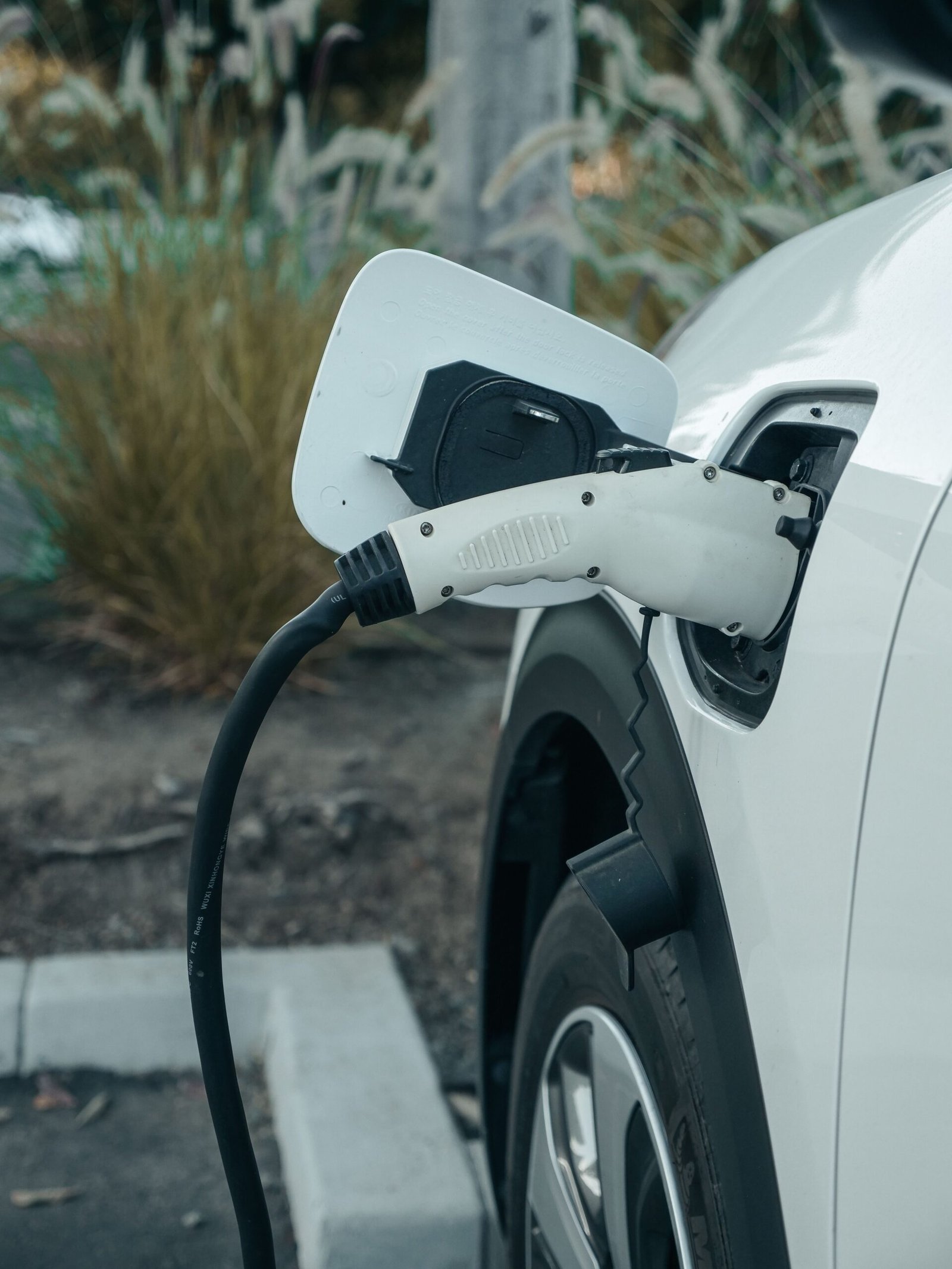
HOW WE HELP YOU

HOW WE HELP YOU

Find Your Nearest Charging Station

Search for EV charging stations by ZIP code, city, or state. Access essential details like connector types, network, and directions.

Network & Connector Coverage

Major US network integrations across DC Fast and Level 2 charging. Find locations that support Tesla, ChargePoint, EVgo, Electrify America, and more.

Prepare for Your Stop

Get guidance on what you’ll need — network app, RFID card, or payment method — so your charging stop is quick and hassle-free.

Trip Planning Made Easy

Learn how to plan longer routes around DC Fast corridors and avoid getting stranded with a low battery.

Frequently Asked Questions

Answers to common questions like “How do I use a public EV charger?”, “What happens if a charger is out of service?”, and “Are chargers available 24/7?”

Information Hubs

Information Hubs

Charging Stations

Find charging stations near you with connector types, port counts, and directions.

Network & Operator Guide

Find locations that support Tesla, ChargePoint, EVgo, Electrify America, Blink, and more.

DC Fast & High-Speed Corridors

Chargers built for road trips — locate DC Fast stations along major highways and travel routes.

Pricing & Payment Support

Guidance for EV drivers — typical pricing models, payment methods, and membership plans.

Guides & Resources

Simple, practical guides so you know exactly what to expect. Includes step-by-step instructions, tips, and common mistakes to avoid.

blog

Latest Blog Posts

No posts found!

Stay Connected With the latest updates
Testimonials

Customer Reviews

Reach Out To Us

Contact Form Demo